
Table of Contents
Quick answer: To maintain a refinished wood door, let the new finish cure for about 30 days, then dust it weekly, wash it monthly with a soft damp cloth and pH-neutral soap, keep it shaded from direct sun, inspect the finish every three months, touch up chips right away, and book a professional maintenance coat every 12 to 24 months depending on sun exposure.
- The first 30 days after refinishing decide how hard and durable the finish becomes.
- In Florida, UV light, humidity and salt air cause most early finish failures.
- If water still beads on the surface, the finish is still protecting the wood.
- A maintenance coat applied on time costs far less effort than a full strip and refinish.
Congratulations on your newly refinished wood door! Now that your door looks beautiful and adds curb appeal to your home, it’s essential to maintain its stunning appearance. In this article, we’ll cover the top tips for preserving the beauty of your refinished wood door.
Refinished wood door maintenance is different from general door care because you are protecting a brand-new coating system (stain, sealer and clear topcoat) instead of rescuing an old one. That coating is the only barrier between the wood and South Florida’s sun, humidity, salt air and wind-driven rain, and it lasts much longer when small, regular habits stop wear before it reaches bare wood. This guide covers aftercare for a door that has already been professionally refinished. If your door has not been refinished recently, start with our step-by-step wood door maintenance guide instead.
The First 30 Days: Curing Care for a Newly Refinished Wood Door
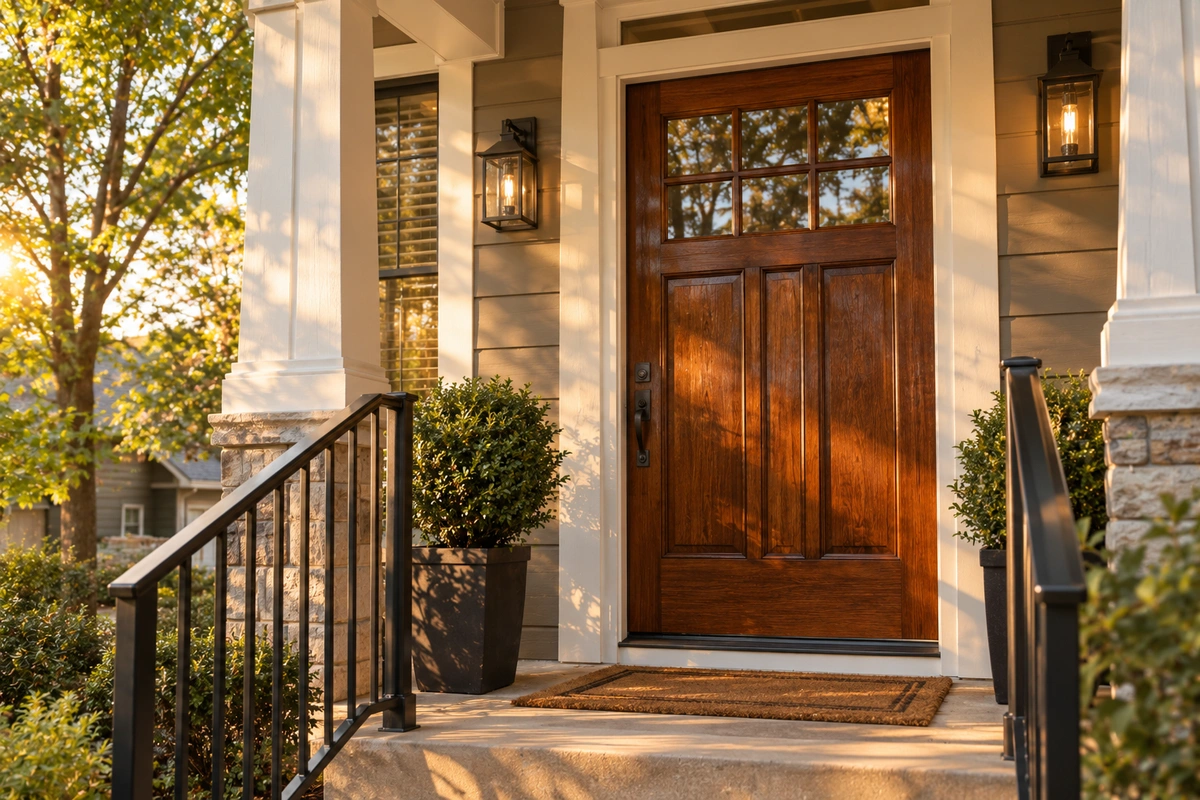
A new finish dries in hours but cures over weeks. Until the topcoat has fully hardened it is easier to dent, imprint and stain, and Florida’s humidity slows the process. Most exterior clear coats reach full hardness in roughly two to four weeks, so treat the first month as a protection period. This refinished door curing time table shows what to do at each stage.
| Period | What the finish is doing | Do | Avoid |
|---|---|---|---|
| First 24–48 hours | Dry to the touch but still soft underneath | Close the door gently and keep pets, bags and keys away from the surface | Slamming, touching the panels, hanging anything on the door |
| Days 3–7 | Hardening as solvents or water leave the film | Dust only with a dry microfiber cloth | Water, cleaners, tape, wreath hangers and door-mounted decor |
| Weeks 2–4 | Approaching full cure | Lift spots with a barely damp cloth and dry immediately | Soap, polish, sprinkler spray and covers that trap heat |
| After day 30 | Fully cured in typical conditions | Start the regular routine below | Abrasives and harsh chemicals, permanently |
Cure times change with the product, the number of coats and the weather during the job. If your door was completed through our door refinishing services in Florida, follow the cure window your technician gave you where it differs from the table.
7 Refinished Wood Door Maintenance Tips for Florida Homes
The seven habits below are the core routine. Each original tip is followed by the detail South Florida homeowners need to apply it correctly.
1. Regular Cleaning
Regularly clean your door to keep it looking its best. Gently wipe down the door with a soft, damp cloth and a mild cleaner, being careful not to scratch the surface. Avoid using harsh chemicals, as they can damage the door’s finish.
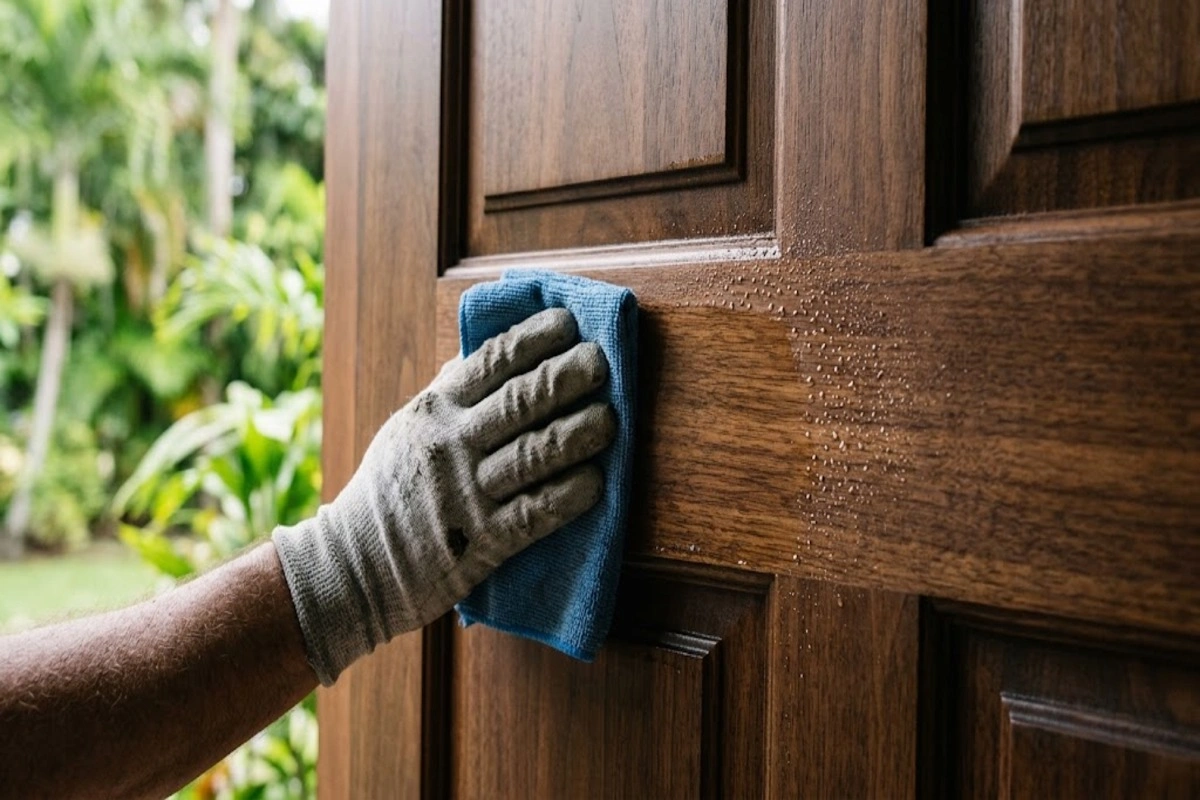
Here is how to clean a refinished wood door correctly: mix a few drops of pH-neutral dish soap into a gallon of lukewarm water, dampen (do not soak) a microfiber cloth, and wipe with the grain from the top down. Follow with a second cloth dampened with clean water, then dry the door straight away, especially the bottom rail and panel grooves where water sits.
Skip ammonia glass cleaners, bleach, citrus degreasers, melamine sponges and anything sold as an oil or silicone polish. These either dull the sheen or leave a residue that stops future coats from bonding. Homes within about a mile of the ocean should add a quick fresh-water wipe every two weeks, because salt crystals hold moisture against the finish and act as a mild abrasive.
2. Dusting
Regular dusting helps prevent dirt and debris from accumulating on your door. Use a soft, dry cloth or a feather duster to gently remove dust from the surface of your door and its surrounding areas.
Dust matters more than it seems. Airborne grit, pollen and sand work like fine sandpaper every time a hand, bag or cloth drags across the door. Dust weekly from top to bottom, and include the top edge of the door, the mouldings around raised panels and the frame around any glass. Use a clean microfiber cloth instead of a pre-treated dusting cloth, since many treated cloths carry oils or silicone.
3. Sun Protection
Prolonged exposure to direct sunlight can fade and damage your door’s finish. Consider installing an awning or using a UV-resistant varnish to protect your door from the sun’s harsh rays.
Sun damage on a wood door is the main reason finishes fail early in Florida. Miami’s UV index averages above 10 from April through August, at the top of the “very high” band and often “extreme” at midday, and south- and west-facing entries take the most direct exposure. UV light breaks down the clear coat first, which shows as a dull, chalky look, and then bleaches the stain underneath.
Shade from a porch, awning or deep overhang is the most effective protection, and a topcoat built with UV absorbers is the second. Our comparison of UV-resistant finishes for Florida homes explains the options. Be careful with full-glass storm doors over dark-stained doors in direct sun, because trapped heat can blister a finish.
4. Inspect for Damage
Regularly inspect your door for signs of damage, such as peeling paint or cracked varnish. Address any issues immediately to prevent further deterioration.
Inspect every three months and after any major storm. Knowing where to check a wood door for damage saves time: look at the bottom rail and lower third of the door (the rain-splash and sprinkler zone), the top and bottom edges, the joints where panels meet the frame of the door, the sealant around glass inserts, and the area around handles and locks.
Two quick tests help. Flick a few drops of water onto the surface: if they bead, the finish is still sealing, and if they darken the wood or soak in, protection is gone at that spot. Then look across the door at a low angle in daylight, where a chalky or whitish haze signals UV breakdown. Soft wood, open joints or dark staining under the finish need more than maintenance, which is work for door repair and restoration services.
5. Touch-Up Paint or Varnish
If you notice minor scratches or nicks on your door, touch them up with matching paint or varnish. This will help maintain the door’s appearance and protect the wood from moisture and damage.
A good wood door touch-up uses the same finish chemistry that is already on the door, because an oil-based product over a water-based coating (or the reverse) may not bond. Lightly scuff the damaged spot with 320-grit paper, wipe away the dust, apply thin coats and feather the edges into the surrounding finish. Test first on the hinge edge, where a mismatch will not show.
If a scratch has gone through the color, the stain has to be matched before any clear coat goes on. Our article on choosing the right stain for your door explains how tone and wood species interact. Painted doors follow the same logic with matching exterior paint, and door painting services are the better route when chips are widespread.
6. Weatherstripping
Check the weatherstripping around your door to ensure it’s in good condition. Replace any damaged or worn-out weatherstripping to prevent drafts and protect your door from moisture.
Weatherstripping protects the finish as well as your power bill. In South Florida an entry door separates cool, dry, air-conditioned air from hot, humid outdoor air, and that difference pushes moisture toward any unsealed edge. Check the door sweep and threshold seal, aim sprinklers away from the entry, and confirm the bottom edge of the door is sealed, since it is the most common entry point for water. For more on moisture control, read about protecting wood doors from South Florida humidity.
7. Lubricate Hinges
Keep your door functioning smoothly by lubricating its hinges regularly. Use a silicone-based lubricant to prevent squeaking and ensure smooth operation.
Apply lubricant to the hinge pin, not the door. Silicone overspray on a finished surface is hard to remove and can cause defects when the door is next recoated, so apply it with a cloth or mask the area and wipe up drips. In coastal areas, rinse and dry handles, locks and hinges when you clean the door, tighten loose hinge screws so the door does not sag and rub its frame, and watch for rust streaks running onto the finish. Homes with metal entry doors or iron grilles face a related problem, covered in our guide to iron and metal door refinishing.
How Florida’s Climate Wears Down a Wood Door Finish
South Florida applies several finish stressors at once. Miami averages about 73% relative humidity and roughly 62 inches of rain a year, its rainy season runs from mid-May to mid-October, and the Atlantic hurricane season runs from June 1 to November 30. This Florida wood door climate matrix matches each threat to the first place it shows and the step that counters it.
| Climate threat | What it does to the finish | Where it shows first | Maintenance response |
|---|---|---|---|
| UV radiation | Breaks down the clear coat, then fades the stain | Upper panels and south- or west-facing doors | Add shade, use a UV-inhibiting topcoat, recoat on schedule |
| Humidity and rain | Swells the wood, lifts finish at joints, feeds mildew | Bottom rail and panel joints | Keep all six sides sealed, dry after cleaning, maintain weatherstripping |
| Salt air | Leaves an abrasive, moisture-holding film and corrodes hardware | Hardware and the ocean-facing side | Fresh-water wipe every two weeks, dry the hardware |
| Heat cycling | Expands and contracts the wood, cracking brittle coatings | Panel edges and dark-stained doors | Use a flexible exterior-grade finish, avoid heat-trapping covers |
| Wind-driven rain | Forces water into edges, thresholds and glass seals | Bottom edge, threshold and glass sealant | Inspect before storm season, rinse and dry after storms |
Climate figures: NOAA and National Weather Service Miami climate normals; hurricane season dates from the National Hurricane Center.
The door material changes how these threats play out. Mahogany, other hardwoods and fiberglass each respond differently to the same exposure, as our guide to the best exterior door finish options in Miami-Dade explains.
Wood Door Maintenance Schedule for South Florida
A written schedule turns good intentions into a routine. Use this wood door maintenance schedule as a starting point and tighten it for doors in full sun or close to the coast.
| Frequency | Task | Time needed | Why it matters |
|---|---|---|---|
| Weekly | Dry-dust the door, panel mouldings and top edge | 2 minutes | Removes grit before it scratches the topcoat |
| Every 2 weeks (coastal homes) | Wipe with fresh water and dry | 5 minutes | Lifts salt film that holds moisture on the finish |
| Monthly | Wash with pH-neutral soap, rinse and dry | 10 minutes | Clears pollen, mildew spores and airborne grime |
| Every 3 months | Inspect the finish, run the water-bead test, check weatherstripping and sprinklers | 15 minutes | Catches wear while a touch-up can still fix it |
| Yearly | Lubricate hinges, tighten hardware, check glass sealant | 15 minutes | Prevents sagging, rubbing and water entry |
| Before June 1 | Pre-storm-season inspection and touch-ups | 30 minutes | Seals weak spots before the wettest months |
| Every 12–24 months | Professional maintenance coat | Scheduled visit | Renews UV and moisture protection before the finish fails |
Keep a dated note or phone photo after each quarterly inspection. Comparing photos taken in the same light is the easiest way to spot slow fading that is hard to notice day to day.
Hurricane-Season Care for a Refinished Wood Door
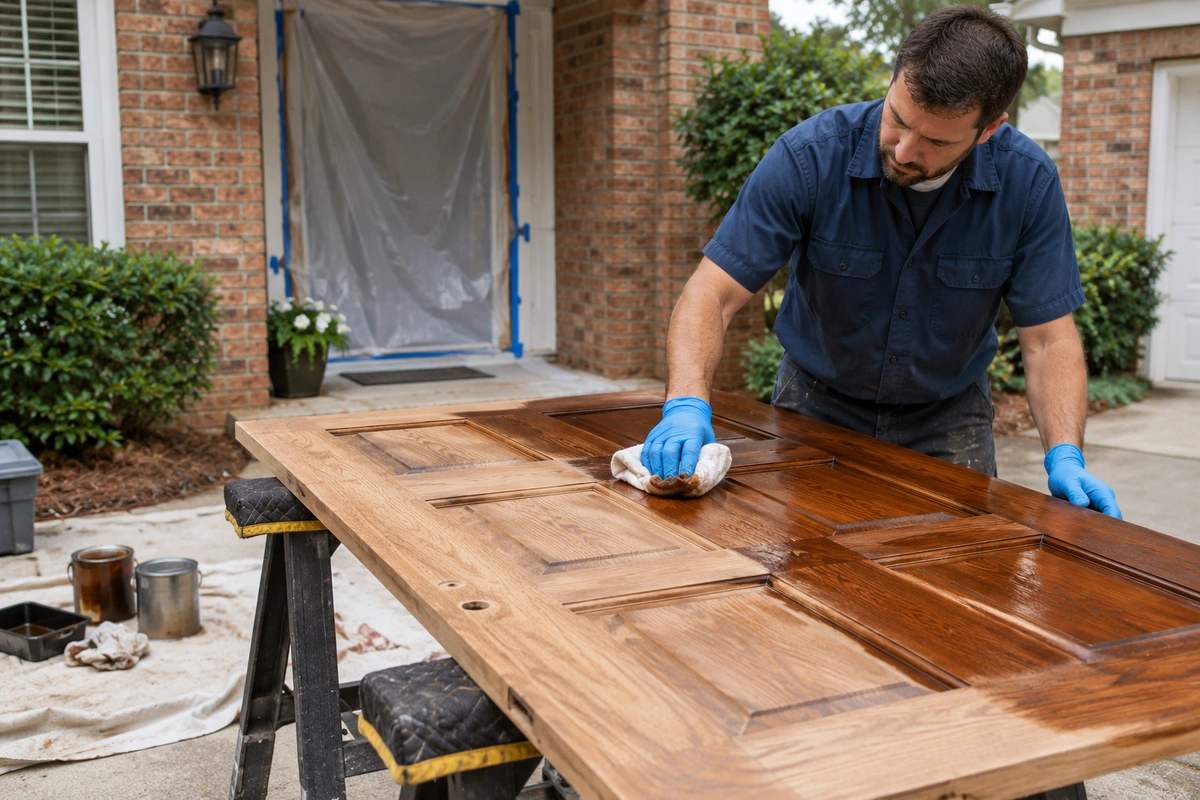
Good hurricane season door care starts months before the first storm. The best window for a maintenance coat is the dry season, roughly November through April, when lower humidity helps coatings cure. Aim to finish inspections and touch-ups before June 1 so the door enters the wet season fully sealed.
When a storm approaches, do not tape anything to the finish, because adhesive can pull the topcoat away when it is removed. Fit shutters or panels carefully so they do not gouge the door or frame, and clear debris from the threshold so water can drain. After the storm, rinse salt spray and debris off with fresh water as soon as it is safe, dry the door, and check the bottom edge, threshold and glass sealant for trapped water. If you would prefer a technician to assess the finish, post-storm checks are available through our door refinishing Miami and door refinishing Fort Lauderdale teams.
Maintenance Coat or Full Refinish: How to Tell
A wood door maintenance coat is a light scuff-sand followed by one or two fresh layers of clear finish over a coating that is still sound. It is quicker and less invasive than stripping, but it only works if it is done before the old finish fails. Expect to need one roughly every year on a door in strong sun and about every two years on a sheltered entry.
| What you see | What it means | Recommended action |
|---|---|---|
| Slightly dull sheen, water still beads | Normal surface wear | Clean the door and schedule a maintenance coat |
| Light scratches that have not reached the color | Topcoat damage only | Spot touch-up with a matching finish |
| Chalky haze, water no longer beads | The topcoat is breaking down | Maintenance coat soon, before the stain fades |
| Peeling, cracking, gray or blackened wood | The finish has failed and wood is exposed | Full strip and refinish |
| Soft spots, open joints or warping | Moisture has damaged the wood itself | Repair and restoration, then refinish |
If your door matches one of the last two rows, the next step is covered in our guides on how to refinish a door and door refinishing cost in Florida. Deciding who should do the work is a separate question, and our comparison of DIY vs. professional door refinishing sets out the trade-offs.
What Not to Do to a Refinished Wood Door
Most premature finish failures come from a short list of avoidable habits. Steer clear of these wood door care mistakes:
- Pressure washing or hosing the door. High-pressure water is forced into joints, edges and glass seals.
- Using oil, wax or silicone polish. Residue attracts dirt and interferes with the next coat of finish.
- Sticking hooks or tape to the finish. Adhesive can lift the topcoat when removed.
- Hanging bare metal wreath hangers. They rub through the finish on the top edge; choose a felt-backed hanger.
- Letting sprinklers hit the door. Daily wetting, often with mineral-heavy water, spots and breaks down the lower panels.
- Scrubbing with abrasive pads. Scratches in the clear coat become entry points for moisture.
- Waiting on small chips. In humid air, a chip that reaches bare wood spreads under the surrounding finish.
Errors made during the refinishing job itself are a different topic, and our list of door refinishing mistakes in South Florida covers those in detail.
What South Florida Homeowners Say About DoorStain
Door Refinishing South Florida holds a 5.0 rating across 13 Google reviews. These two door refinishing reviews are quoted exactly as customers posted them:
“I saw their work on Yelp and reached out to get my antique front door refinished. I was so impressed by how they handled the restoration. It looks amazing, and I can tell they really care about their work”
Hamidrezs Khosdaman, Google review
“I choose this company to refinish my front door and garage door they are doing very hard work and amazing job so far my door look very nice”
Hasnain Khan, Google review
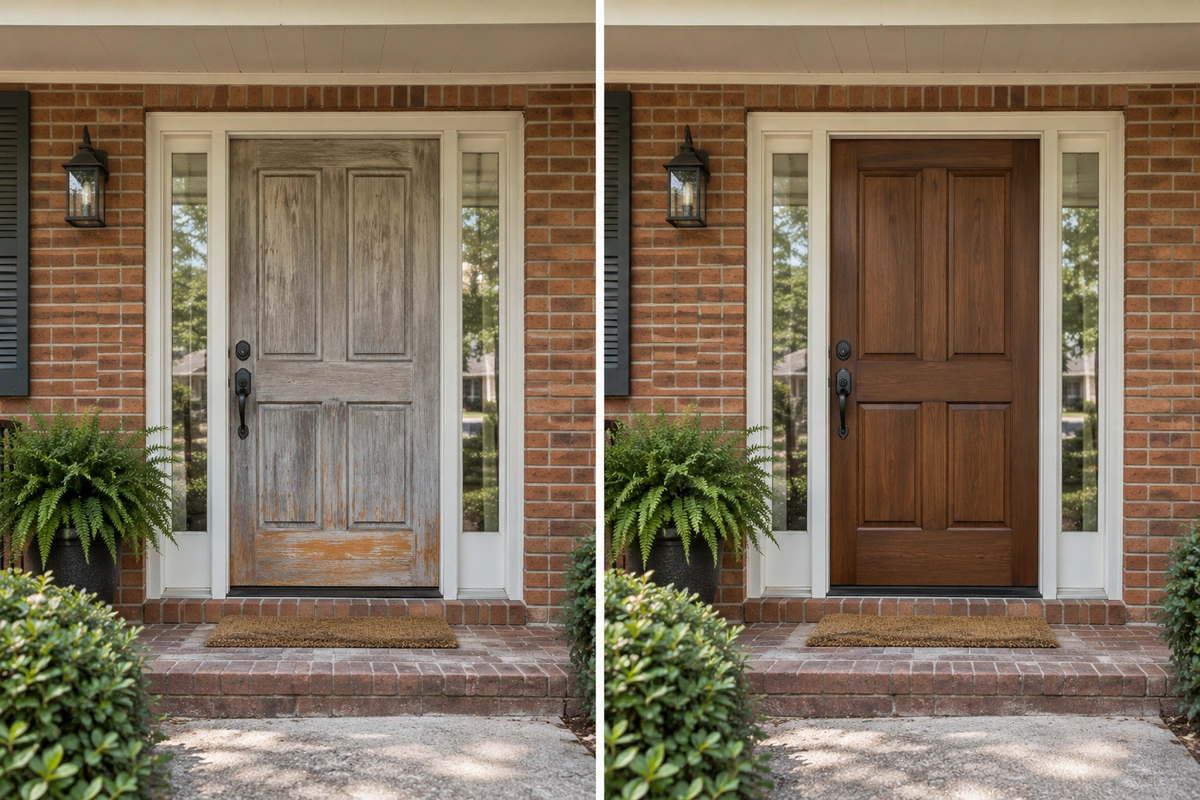
You can see finished entries, including before-and-after photos, in our door refinishing portfolio.
Conclusion
Maintaining the beauty of your refinished wood door doesn’t have to be complicated. By following these simple tips, you can keep your door looking stunning and protect your investment for years to come.
In short: keep the door clean, keep it dry, keep it shaded, and renew the topcoat before it fails. For related guides, browse our door maintenance and care articles.
FAQs
How often should I clean my refinished wood door?
It’s best to clean your door at least once a month or as needed, depending on the amount of dust and dirt in your area.
Can I use any type of cleaner on my refinished wood door?
Avoid using harsh chemicals or abrasive cleaners. Instead, use a mild cleaner specifically designed for wood surfaces.
How can I protect my door from the sun?
Consider installing an awning or using a UV-resistant varnish to shield your door from direct sunlight.
How do I know if my door’s finish is damaged?
Look for signs like peeling paint, cracked varnish, or fading. If you notice any of these issues, it’s time to address them immediately.
How often should I lubricate the hinges on my door?
Lubricate your door’s hinges at least once a year or as needed to ensure smooth operation.
How long should I wait before cleaning a newly refinished wood door?
Wait about 30 days before using any soap or cleaner. During the first week, dust only with a dry microfiber cloth. From week two, you can lift spots with a barely damp cloth and dry the area immediately. Your refinisher may give a shorter or longer window depending on the product and the weather.
How often does a refinished wood door need a maintenance coat in Florida?
Plan on a maintenance coat roughly every 12 months for a door in direct sun and about every 24 months for a shaded or covered entry. The right moment is when the sheen dulls and water stops beading, before the stain underneath begins to fade.
Can I pressure wash a refinished wood door?
No. A pressure washer or a hard hose jet forces water into joints, edges and glass seals and can lift the finish. Clean by hand with a damp microfiber cloth and pH-neutral soap, then dry the door.
Is furniture polish safe on an exterior wood door?
Avoid it. Lemon oil, wax and silicone polishes leave a residue on the topcoat that attracts dirt and can stop the next coat of finish from bonding. A clean, damp cloth is all a sound exterior finish needs.
Why does my refinished door look cloudy or hazy?
A white or milky haze usually means moisture is trapped in or under the topcoat, while a dry, chalky haze points to UV breakdown. Wipe the door with a damp cloth first; if the haze stays, the finish needs professional attention before the wood is exposed.
What is the best time of year to recoat a wood door in South Florida?
The dry season, roughly November through April, is best. Lower humidity and fewer afternoon storms help the new coating cure properly, and the door is protected again before hurricane season starts on June 1.
For questions about scheduling, service areas and the refinishing process, visit our door refinishing FAQ.
Get a Free Quote for Wood Door Maintenance or Refinishing
If your door is due for a maintenance coat, or you are not sure whether it needs one, send us a few photos and we will tell you. Door Refinishing South Florida is located at 2598 E Sunrise Blvd #2104, Fort Lauderdale, FL 33304, and serves homes across South Florida.
Call or text: +1 (786) 744-4464
Hours: Monday to Friday 8 AM–7 PM, Saturday 8 AM–5 PM, Sunday 9 AM–5 PM
For the fastest free door refinishing quote, upload a full-door photo, a close-up of the most worn area and a photo of the bottom rail using the form below.